@porres said:
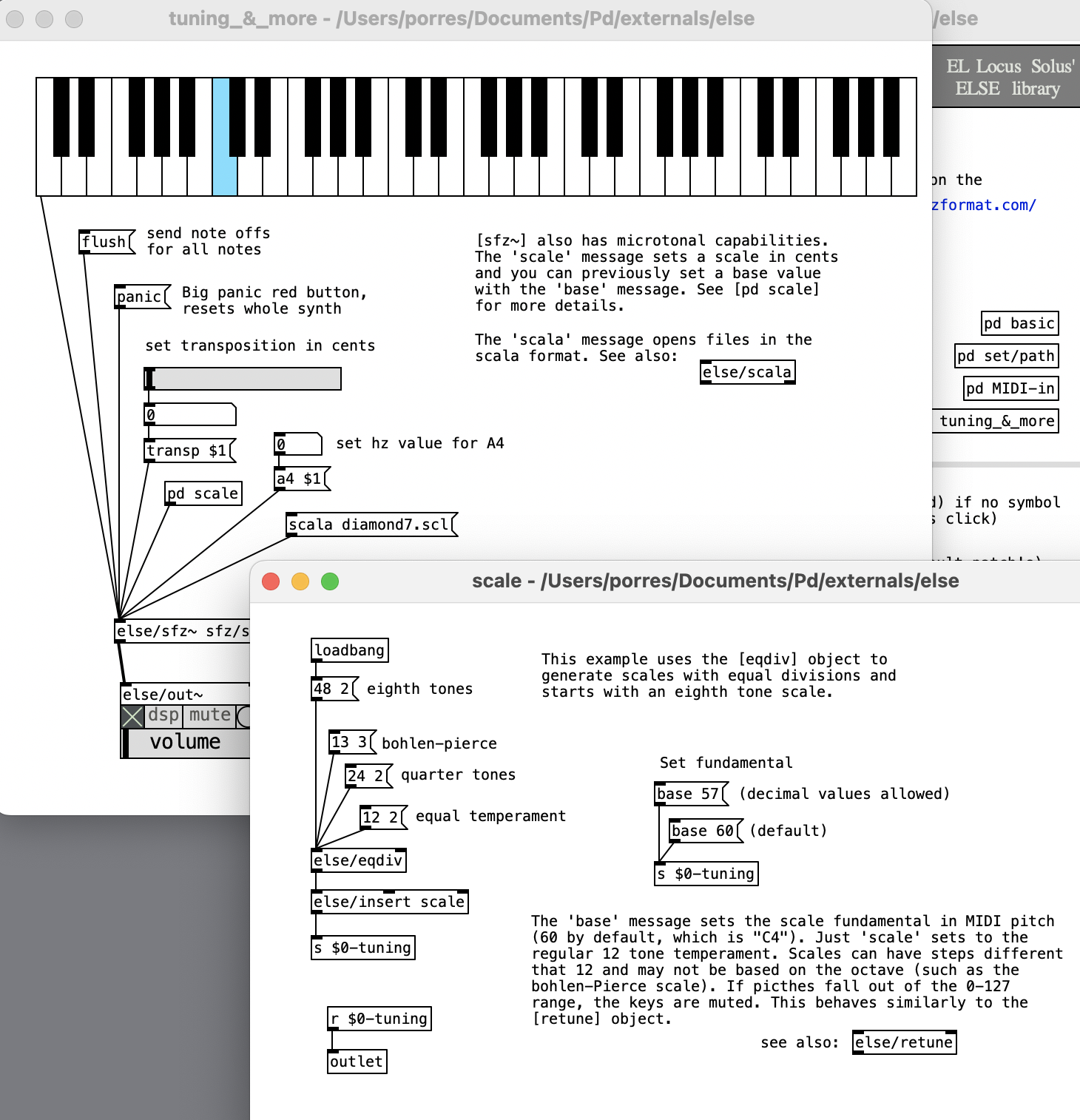
I thought you wanted particular scales, like 8th tones
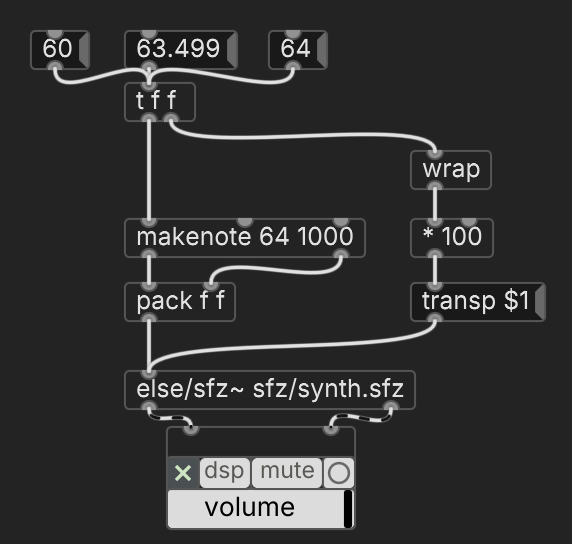
My real interest in this is (cheap[1]) just intonation, where both the Pythagorean and the harmonic-series major third enter into it (separated by a syntonic comma). If you'll need to use the pure third in one context and the Pythagorean third in another, then you don't want to reconfigure the instrument's overall tuning midstream; you just want to apply a fractional offset to a note, and be done with it.
There is one other problem, though: with fractional MIDI notes, you may need two or more voices playing different C naturals. Then, which voice should a note-off target? I predict confusion, for instruments like the else samplers, which truncate or round the note number. MPE disambiguates it by addressing channel numbers. So I'd guess that else/sfz~ would have trouble with the microtonal clusters in the little video (as, for that matter, did vanilla's [poly]). So the MPE way is more robust in this aspect.
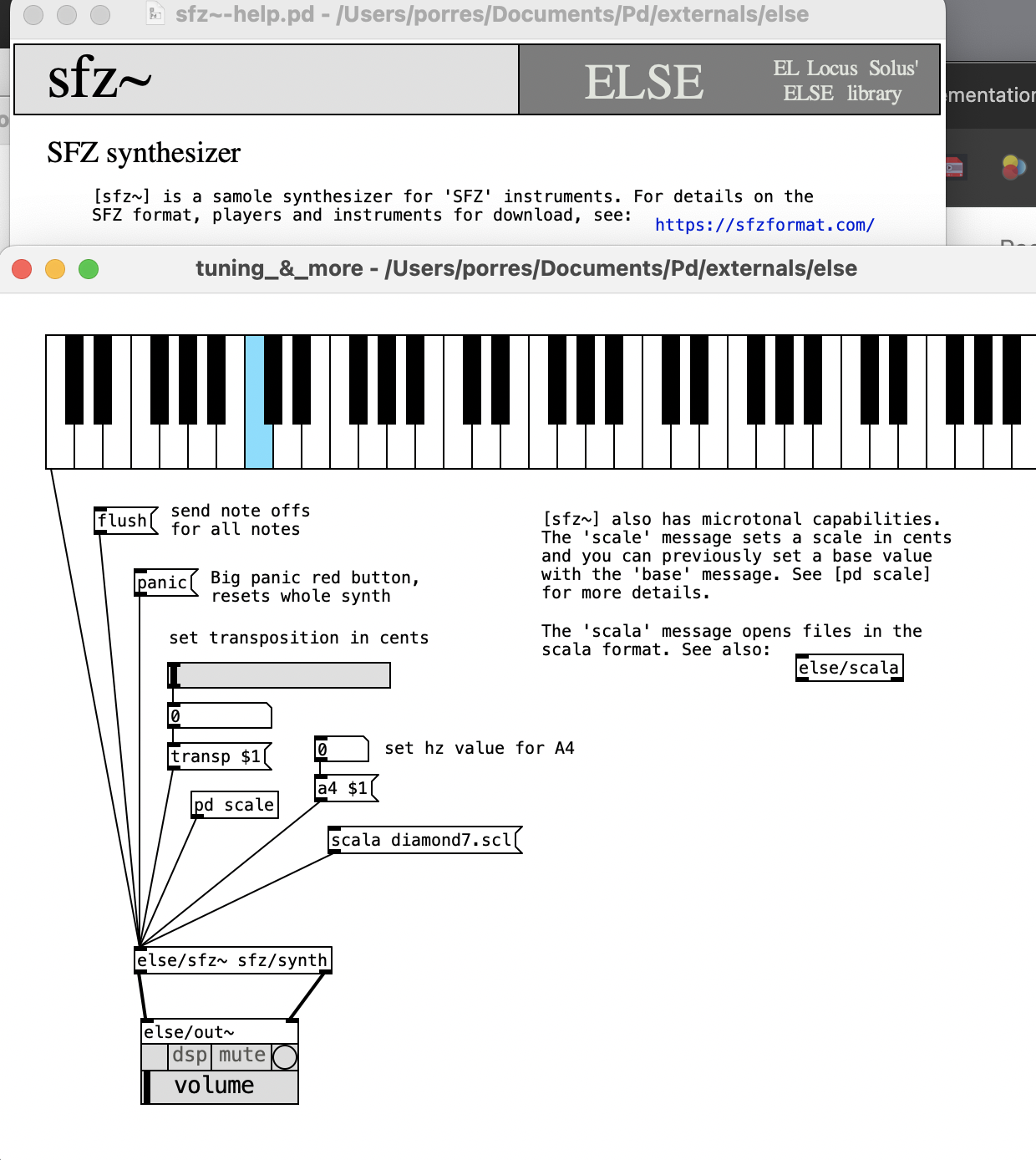
Come to think of it... why does else/sfz~ truncate note numbers? You're not bound by the limits of the MIDI protocol; why not fully support fractional note numbers? (I guess it's because of a dependency on a sfz library that is stuck in the 80s/90s.)
hjh
[1] There's a neat little paper in Music Theory Online (can't find the reference now) that gives one approach to generating 5-limit JI scales: starting on, say, F, go up by pure 5ths, except every fourth step, adjust the 5th downward by a syntonic comma. Assuming C as the root and applying octave corrections, you'd get F = 2/3 (4/3), C = 1, G = 3/2, D = 9/8, A = 27/16 * 80/81 = 5/3 (pure m6 vs C), E = 5/4, etc with the next comma correction at C#. Doing this on C gives you another variant, as do G and D, completing the set of distinct scales. (The 5th one would start on A and comma-correct on C# and F, which IIRC would replicate the F scale a comma higher, so the author didn't consider that to be distinct.) The right one of these 4 scales can be chosen for different harmony contexts.
Thinking of microtones in terms of applying a single scale to the whole instrument excludes this type of approach. That is, I wasn't ignoring support for scales, but rather, I was deliberately not interested in that.